
Trends
Old Money, Gorpcore, and the Death of the Trend Hamster Wheel
For a few years, an aesthetic lasted about as long as a carton of milk. Then the wheel slowed down — and almost nobody noticed the best menswear news of the decade.
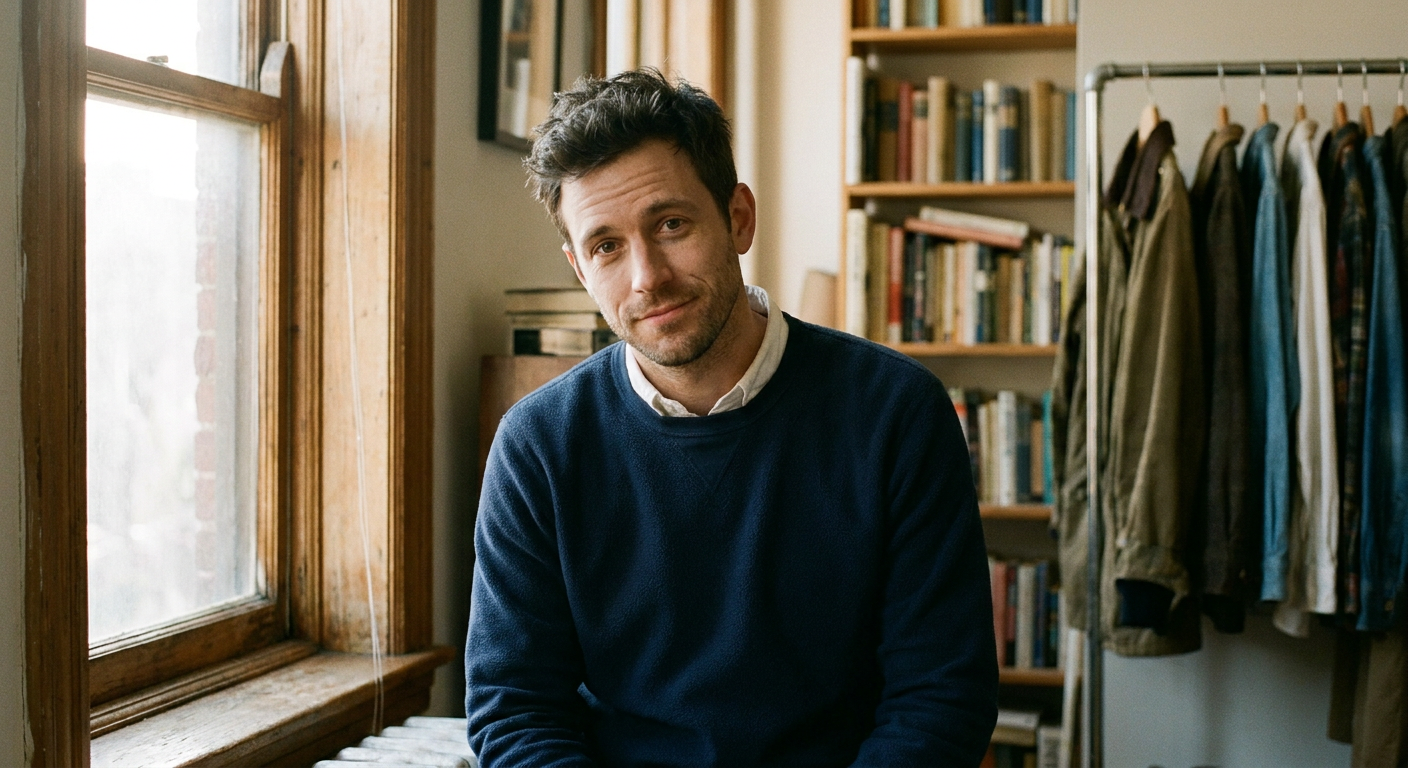
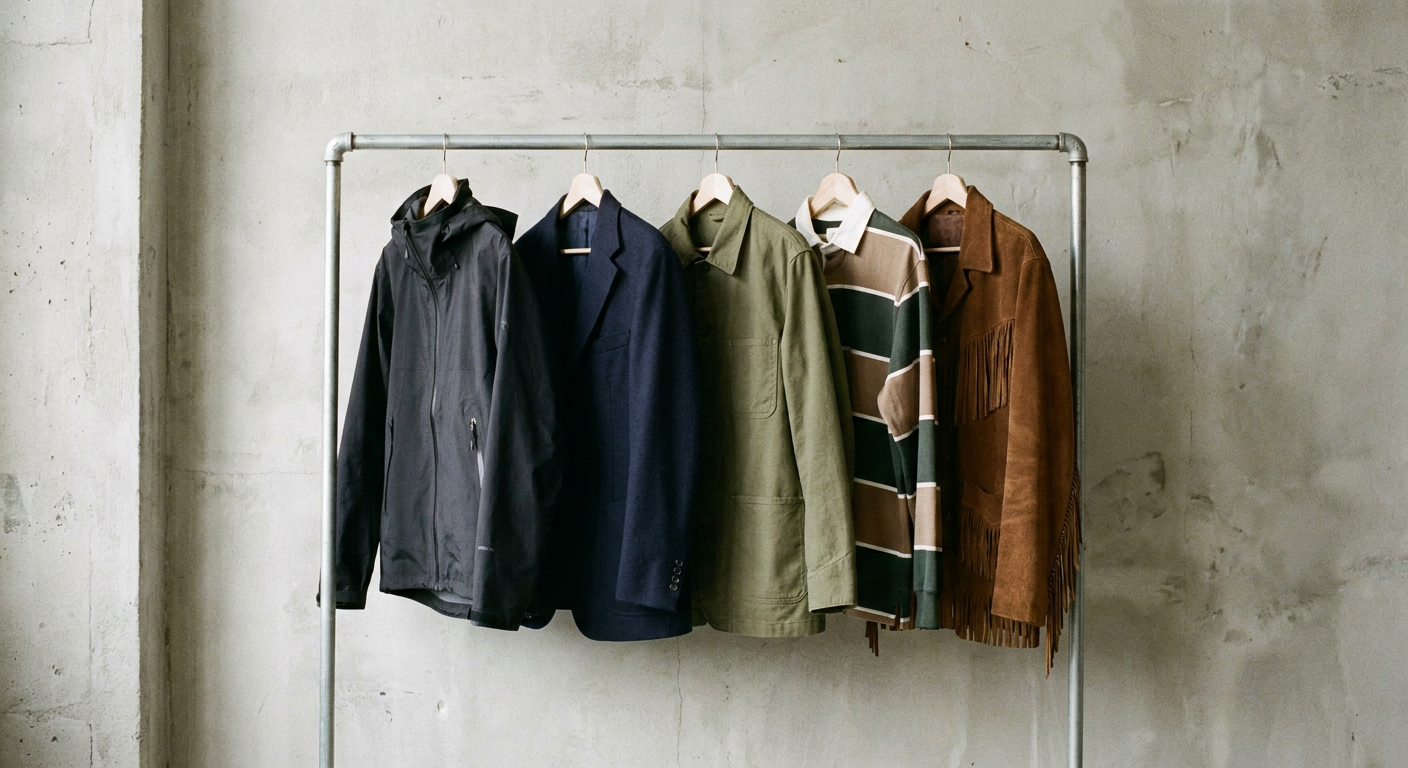
There was a stretch — call it 2020 through 2023 — when keeping up with menswear aesthetics was like subscribing to a magazine that published hourly. Gorpcore. Old money. Blokecore. Regencycore, briefly, because of a television show. Coastal grandfather, which I still maintain was a psyop. Gorpcore again, rebranded. Each one arrived with a TikTok sound and a haul economy, colonized the feeds for six weeks, produced one wave of panic-buying, and died before the packages cleared the porch — leaving behind a sediment layer of barely-worn clothes and men vaguely embarrassed about a bucket hat.
If you felt insane during this period, that was the correct response. If you've noticed it seems to have… stopped? You're right about that too. And the stopping is, I'd argue, the most underreported good news in menswear this decade — worth understanding properly, because what killed the wheel tells you how to dress after it.
The wheel, measured
Don't take the vibe's word for it; the trend-forecasting industry itself called the top, which is a bit like the weather service announcing the end of weather. A WGSN forecaster — WGSN being the firm brands pay to know what's next — told the Business of Fashion's trend post-mortem that at the peak, viral microtrends lasted "only a month or two," and that surveying 2024 she could think of "only a handful" of new ones. The machine that had been minting a fresh "-core" every news cycle had stalled. Her description of the pandemic years is the epitaph the era deserves:
"We were on a hamster wheel and we couldn't get off it, and that has changed."
The themes that survive now stretch instead of churn. Leopard print and barrel-leg denim — 2024's contributions — were still selling a full year later, which by 2021 standards makes them practically geological. American Eagle's chief marketing officer said the quiet part in the same reporting: fewer trends now, with longer arcs. Trend analytics firms tracking search and sell-through say the same thing in charts.
Precision matters here about what didn't happen, because the strong version of this claim fails. People did not stop using the labels — "old money" and "gorpcore" remain perfectly live search terms, and the aesthetics themselves are fine. What died is the churn rate: the expectation that the entire aesthetic regime turns over before your return window closes. The difference matters enormously, and we'll get to why.
Why it stopped
Partly exhaustion, obviously. But exhaustion alone doesn't kill a business model; economics do, and three separate economic supports gave out at once.
The novelty subsidy ended. The microtrend engine ran on functionally free clothes — $12 Shein hauls made trying on an identity cost less than lunch, so the algorithm could demand a new identity weekly and the audience could comply. But closets filled, wallets tightened, the de minimis loophole that made $12 hauls possible got closed, and tariffs started pushing every price tag north — nearly three-quarters of fashion executives say they're raising prices this year. A costume change every six weeks is a subscription, and the subscription got a price hike.
The trust collapsed. Three years of buying the thing the feed said to buy taught a generation, empirically, what the feed's recommendations were worth. The dupe-industrial complex — seventy percent of Gen Z buys dupes — was itself a form of learning: if the trend will be dead in six weeks, why pay full price for it? And if the logical move is always the dupe, maybe the trend was never worth chasing at all. The wheel taught its own riders to dismount.
The content layer detached from the clothes layer. This is the structural one. The microtrends were never really menswear trends — they were content genres that happened to use clothes as props. Gorpcore-the-content-genre lasted eight weeks of feed dominance. Gorpcore-the-actual-thing — technical shells and trail shoes worn to the bodega — settled in permanently, because it solves real problems: rain, pockets, comfort, looking vaguely capable of leaving the city. The content cycle and the clothes cycle ran at different speeds all along; the pandemic just let the content cycle borrow the clothes cycle's credit card for a while. The card got declined. The clothes went back to moving at the speed clothes actually move, which is years.
Archetypes are what's left when the wheel stops
Here's the useful part. Strip the hashtags off the last five years of "trends" and inventory what actually persisted, and you get a short, stable, boring-in-the-best-way list. The outdoors-technical thing. The tailored thing. The workwear-heritage thing. The clean-minimal thing. The western-Americana thing. The prep-ivy thing, on its fourth revival since the fifties. Seven or eight durable archetypes — sensibilities with decades of history, real communities, and reasons to exist — that the microtrend era kept slicing thin, renaming, and selling back as novelties. "Old money" was prep with a class-anxiety marketing layer. "Gorpcore" was outdoor gear worn sincerely, which people in Portland had been doing since before TikTok existed.
The trends were rented. The archetypes are owned.
The practical upshot, for anyone trying to dress like an adult in the post-wheel era: you never had a trend problem. You had an orientation problem. The men who came through the microtrend years looking consistently good weren't faster on the wheel — they were off it entirely, anchored to two or three archetypes that fit their actual life, letting trends arrive as minor weather rather than regime change. A guy oriented toward workwear-heritage doesn't panic when barrel jeans trend; he already owns wide trousers, and he knows which of his jackets they work with. Orientation converts the entire trend cycle from a treadmill into a buffet.
Figuring out which archetypes are actually yours — not this month's, yours — turns out to be the whole game. It's also the part nobody teaches, which is its own essay.
A prediction, gently
The trend-industrial complex needs churn the way networks need news, so it will absolutely try to restart the wheel. There will be another coastal-somebody. Some fabric or decade will get its six weeks; the posts will do numbers; a fast-fashion company will move some units. Fine. Weather happens.
But watch what men actually wear over the next few years — closets, not feeds — and I think the arcs keep lengthening: fewer costumes, deeper wardrobes, purchases justified in years instead of posts, clothes chosen because they belong to a sensibility the owner could name if you asked him. The quiet data already points that way, and so does every conversation I have with men under thirty-five who lived through the churn and came out the other side wanting, above all, to never do that again.
Milk-carton fashion had its moment, and the moment sold a lot of milk. Turns out most men, given the chance and a little orientation, would rather buy things with a longer shelf life — and for the first time in about five years, the culture is letting them.
Theo Marsh is the editor of the Fresh Journal. Cleveland-raised, Brooklyn-based; former vintage buyer and recovering sneaker reseller. He owns four navy sweaters and regrets none of them.