
Culture
Why Every Sneakerhead You Know Is Suddenly Into Loafers
The sneaker bubble didn't pop. It did something slower and more interesting — and the guys who lived through it came out with better taste.
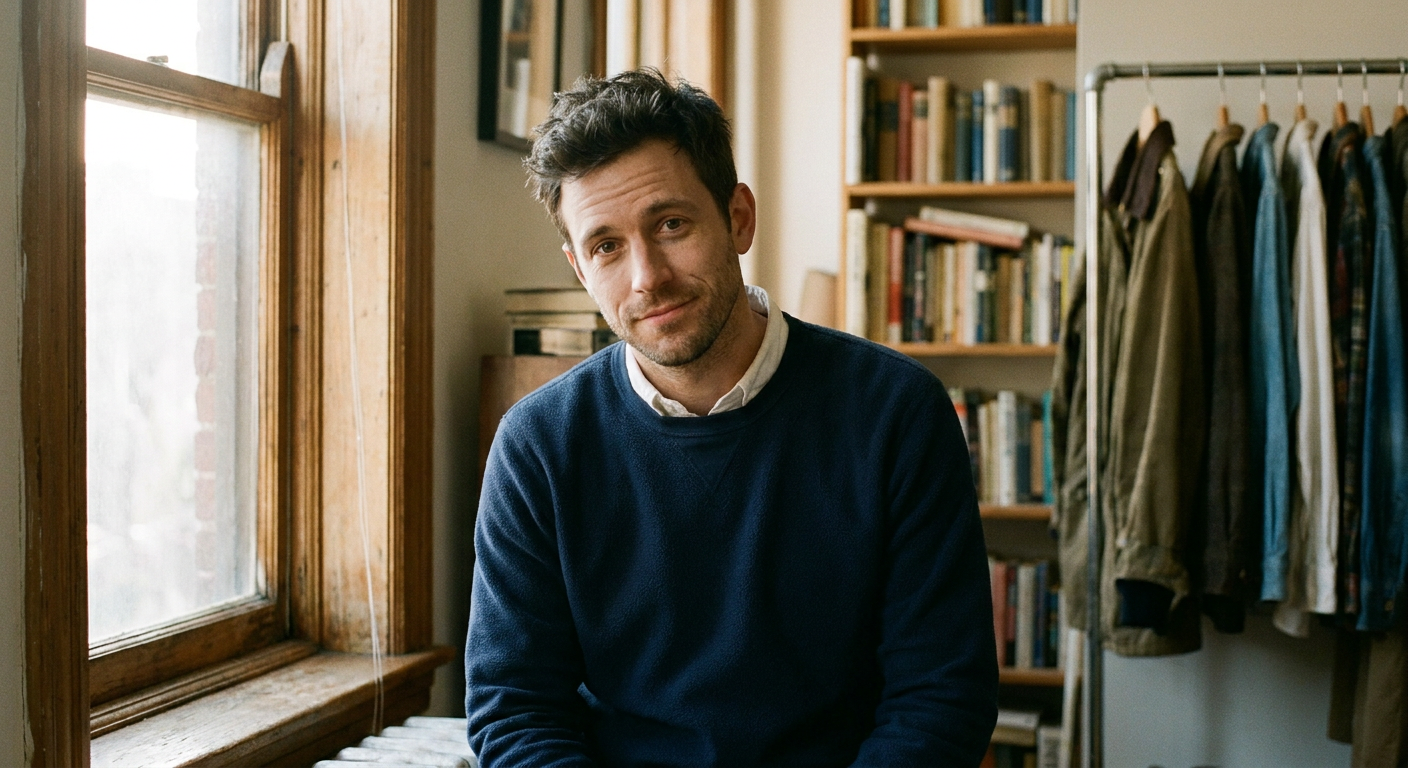
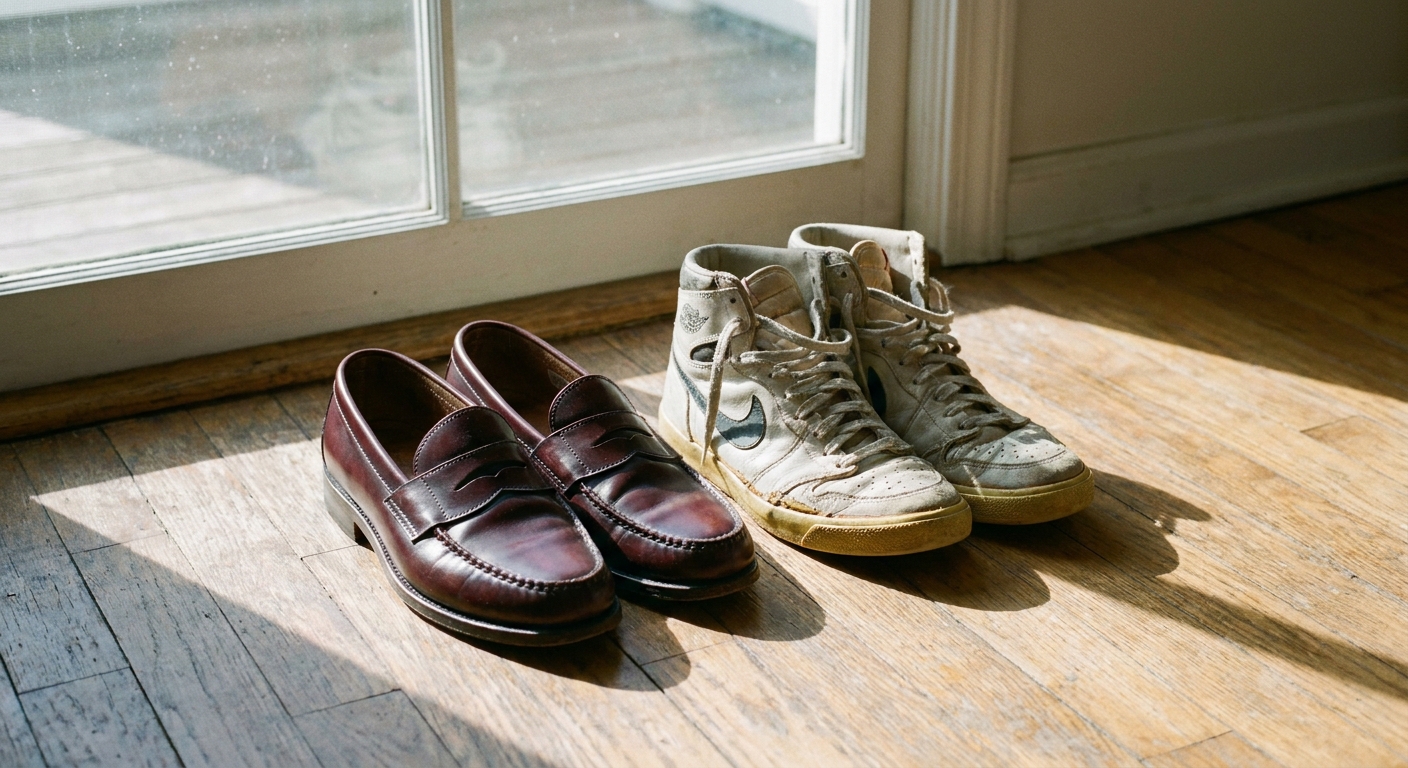
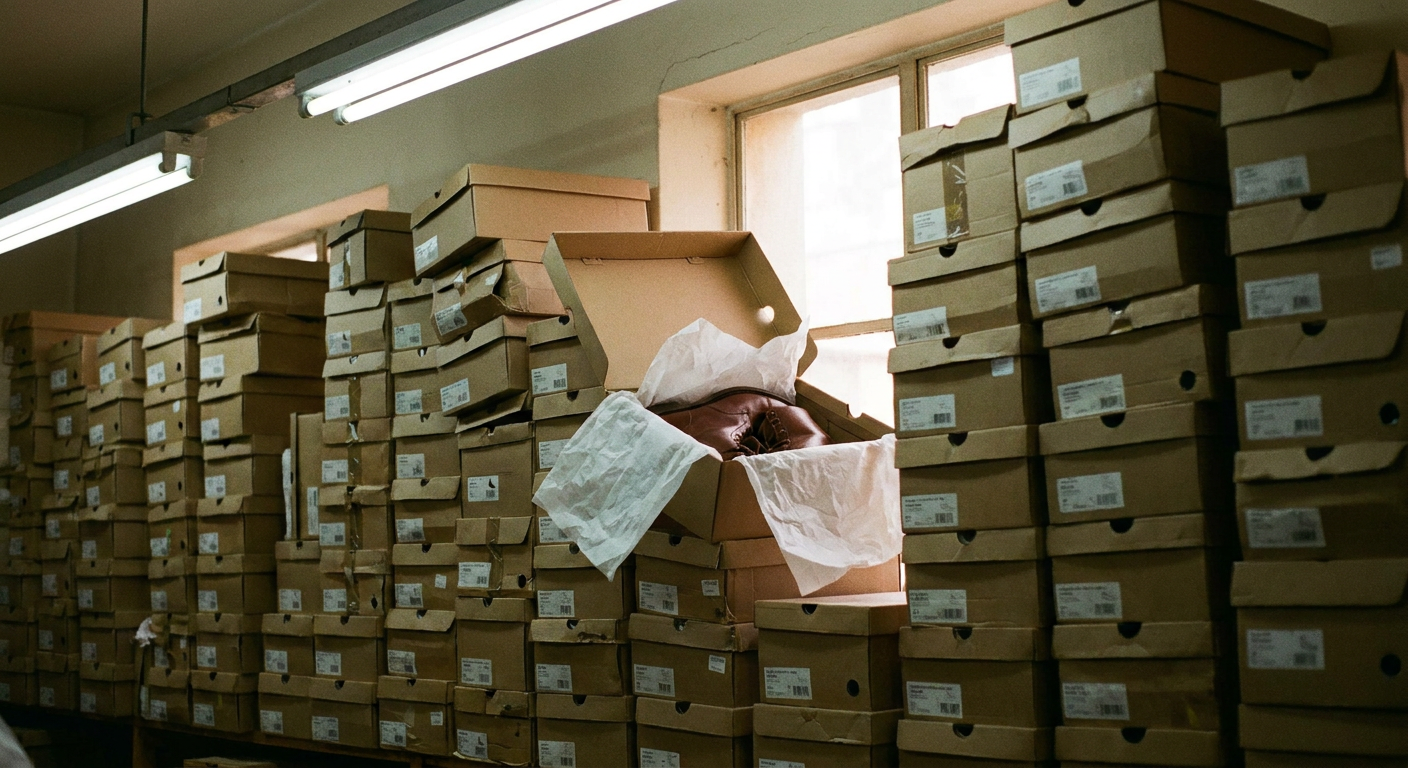
I used to resell sneakers. Between 2016 and 2020 I had a storage unit in Bushwick with about three hundred pairs in it, organized by silhouette, and a spreadsheet I checked more often than my bank account. I knew release calendars the way priests know feast days. I once drove to Philadelphia and back in a night for six pairs of shoes I never intended to wear. So understand that what follows is said with love, as a veteran and not a tourist: that world is over, the numbers prove it, and the guys it trained have quietly become the most interesting dressers in America.
The stock market crashed politely
The sneaker resale economy was never really about shoes. It was about scarcity doing an impression of the S&P — an asset class you could hold in your hands and flex on your feet, with StockX as its Bloomberg terminal, complete with tickers, bid/ask spreads, and portfolio anxiety. For a few years the impression was flawless. Limited releases doubled overnight. Kids out-earned their parents from a bedroom. The line between collecting and day-trading didn't blur so much as never exist.
Then the underlying math changed, and because this market had real-time price discovery, we can watch the crash in the data with unusual clarity. At the peak in 2020, 58 percent of sneaker releases traded above retail on StockX. By 2024, 47 percent — meaning a majority of "limited" releases now sell for less than sticker. Think about what that number means for a second: the average outcome of winning a raffle became losing money. At Stadium Goods, Nike and Jordan collapsed from roughly three-quarters of sales in 2021–22 to under half by mid-2025 — a one-third share loss for the two franchises that were the culture. The market's own executives date the break precisely: starting in late 2023, primary-market oversupply flipped supply past demand, and it never flipped back.
Share of sneaker releases trading above retail (StockX)
Source: StockX data via Footwear News/WWD.
The flip economics tell the same story more brutally. The trade went from doubling your money on hyped pairs to grinding out ten or twenty dollars a pair on volume — one Stadium Goods executive describes today's resellers moving pairs for "$10, $15, $20" of profit. That's not a hustle anymore; that's warehouse logistics with extra steps and worse benefits. Every reseller I know from the era either quit, went genuinely industrial (pallets, prep centers, software), or aged out into exactly the migration this essay is about.
And the brands did it to themselves, which is the part the eulogies skip. Scarcity was the product; the shoes were the certificate. Faced with quarterly targets, Nike chose to print more certificates — retro after retro, restock after restock — and discovered what every central bank knows: you can monetize credibility exactly once.
Where the energy went
Here's what the "sneaker bubble popped" takes miss, and it's the whole story: the skills didn't depreciate. They were never in the shoes.
A decade of drop culture functioned as a mass education — arguably the largest fashion education American men have ever received, delivered one L at a time. Think about what a serious sneakerhead actually knows. Silhouette and proportion, argued pair-by-pair for years. Materials: the tumbled-leather-versus-nubuck discourse was a materials-science seminar wearing a hypebeast costume. Colorway logic — which is to say, color theory. Provenance, condition grading, market pricing, the discipline of authenticating details invisible to civilians. And underneath all of it, the meta-skill: caring in an organized way about how objects look, in public, with other men, without embarrassment. That last one might be the biggest cultural shift of the era, and sneakers were its Trojan horse.
Point that trained cognition at a market where the scarcity game is dead, and what does it do? It goes looking for a new scarce asset — and finds quality. Hence: loafers. Cordovan shell that develops a personal patina over decades. Unlined suede. Hand-sewn moccasin construction from workshops with waiting lists. Goodyear welts you can rebuild like an engine. Objects with the exact collector-brain appeal of a grail sneaker — variants, makers, materials arcana, provenance — except the appreciation curve runs on dignity instead of resale, and nobody can restock your patina.
The guy who explained Flyknit tension to me in 2018 explained shell cordovan's pore structure to me last month, with the same evangelical eyes. Same muscle. New merchandise. And it's not just shoes: the archive-fashion boom, the vintage market, the tailoring turn among the under-thirties — all of it runs on repurposed sneakerhead cognition. The collector generation didn't stop collecting. It graduated.
The two-tier wardrobe
What the graduates are converging on — mostly without coordinating, which is how you know it's real — is a wardrobe with two speeds.
The base layer still owes everything to streetwear: great tees, real denim, one or two pairs of sneakers that survived the cut because they're actually good shoes rather than good assets. Nobody's renouncing anything; the GATs and 550s aren't going anywhere. On top of that sits a small, slow tier of serious objects: the loafers, the proper overcoat, the jacket with real shoulders, each one researched with raffle-era intensity and bought to be owned for a decade.
The department-store data agrees with the street on this, for once: casualwear runs seventy-plus percent of menswear sales and keeps growing, while tailoring rebounds modestly as chosen-occasion equipment. That's not a contradiction — that's the two tiers showing up in aggregate. Casual sea, quality islands.
Some tuition
There's a temptation to frame the sneaker era as a cautionary tale — a decade of young men lighting money on fire for Nike's benefit. I lived it, I lost plenty, and I still think that framing is wrong.
What the bubble actually taught, expensively and permanently, was the difference between a thing that's hyped and a thing that's good — the single most valuable lesson in all of consumption, one most people never learn at any price. The graduates can smell manufactured scarcity at a hundred yards now. They read materials before logos. They ask "will I want this in five years" because they own boxes of proof that they once didn't ask it.
Steep tuition. But it produced the best-educated cohort of male dressers this country has minted in fifty years — millions strong, entering their peak earning years, allergic to hype and hungry for quality — and the industry has barely begun to reckon with what they'll demand of it.
The loafers are how you spot them. Check the feet, then check the eyes. The eyes still say collector. They never stopped.
Theo Marsh is the editor of the Fresh Journal. Cleveland-raised, Brooklyn-based; former vintage buyer and recovering sneaker reseller. He owns four navy sweaters and regrets none of them.