
Culture
Streetwear Didn't Die. It Put On a Sport Coat.
Virgil Abloh called his shot in 2019 — and almost everyone quoted the prediction wrong. Seven years later, it's worth reading what he actually said.
In December 2019, Virgil Abloh sat down with Dazed and said the quiet part into a microphone:
"I would definitely say it's gonna die, you know? Like, its time will be up. In my mind, how many more T-shirts can we own, how many more hoodies, how many sneakers?"
You know what happened next. "STREETWEAR IS DEAD, SAYS THE MAN WHO SOLD IT TO US" ran around the world in about six hours. The reply guys feasted. Complex and Highsnobiety ran response pieces; half the industry performed grief and the other half performed vindication; and the discourse spent a solid year arguing with a headline.
Almost nobody stuck around for what he actually said in the same breath — that the energy would move into "vintage, archival" clothing, that the smart kids would start mining "the OGs" instead of the drop calendar. And even fewer people caught the clarification he gave Vogue a few months later, in March 2020: streetwear wouldn't disappear, it would regenerate. His exact framing was that new forms — he said tailoring, specifically — would "be born from the regeneration of it," made by designers who came up through streetwear. He named himself and Nigo as the ones who'd do it. He was, at that moment, designing the tailoring-heavy LV² collection with Nigo at Louis Vuitton, which is to say: he wasn't predicting the weather, he was describing what was already on his own cutting table.
Abloh died in November 2021, at forty-one, absurdly early. And then his prediction came true with a precision that's genuinely a little eerie — every clause of it, on schedule, in order.
Check the tape
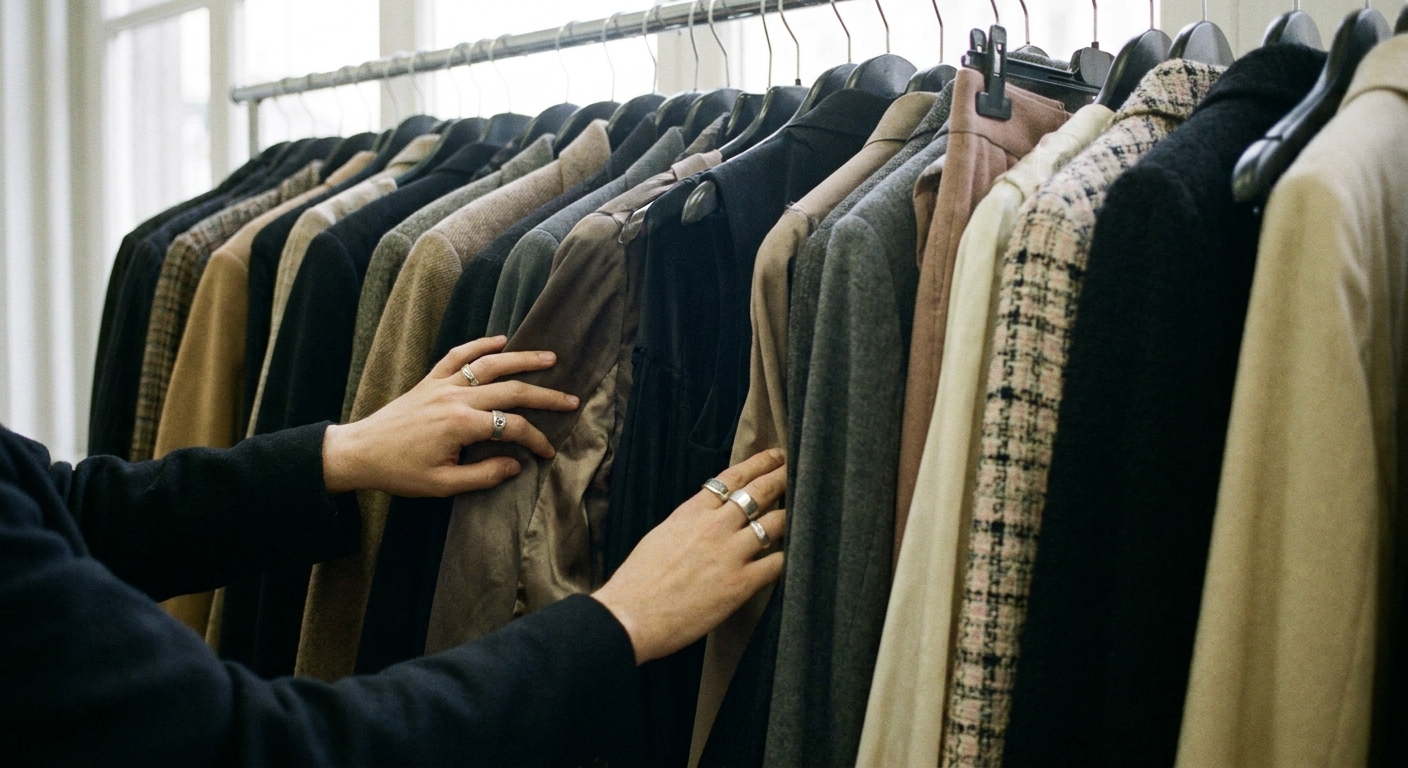
The archive clause. The archive market didn't just grow, it became the defining collecting behavior of the generation. The same guys who camped for box logos in 2017 now stalk Grailed saved-searches and vintage dealers for twenty-year-old Margiela, Raf-era pieces, Japanese denim from labels that no longer exist. "Archive" went from auction-house jargon to a TikTok search category to, by now, a personality type. The rack replaced the raffle. The hunt — because it was always about the hunt — moved backward in time.
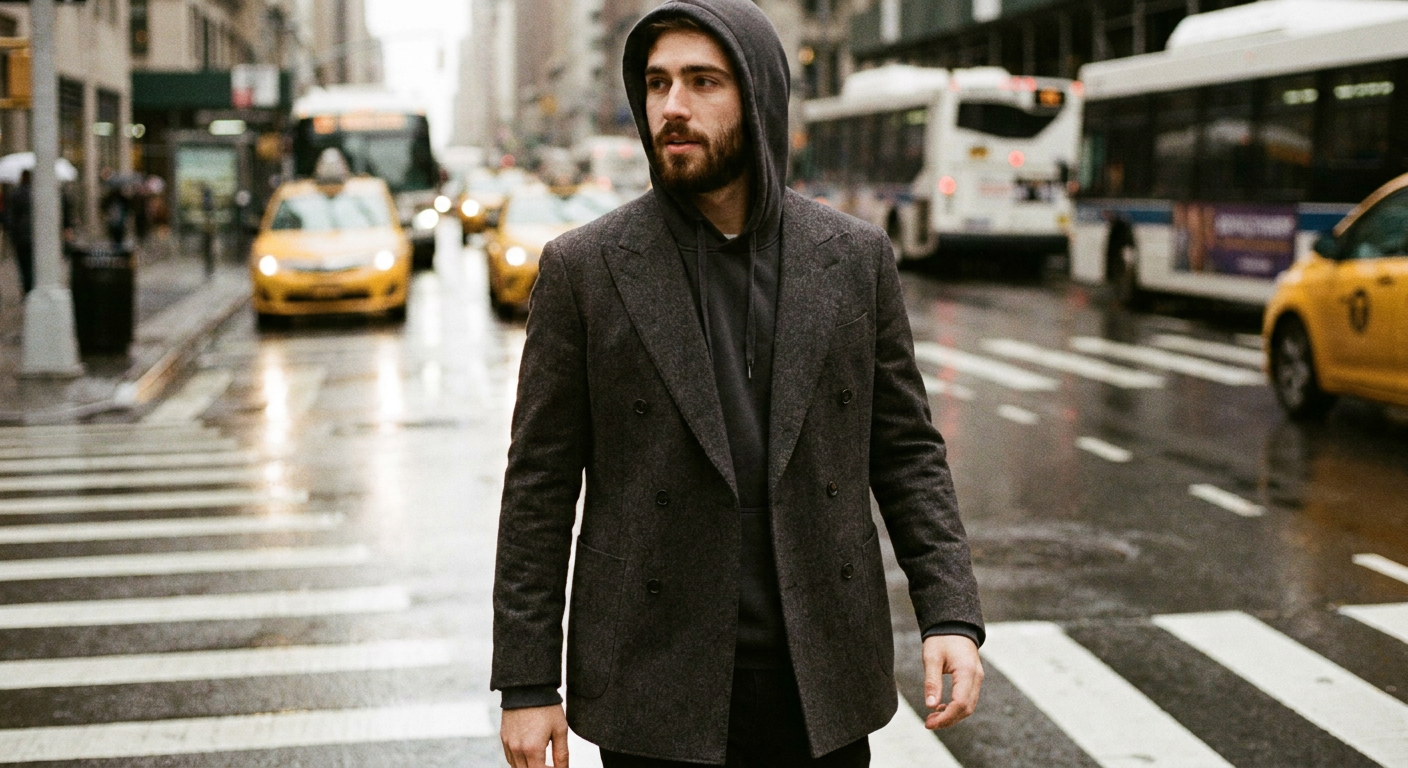
The tailoring clause. The tailoring turn arrived exactly the way Abloh specified — not from Savile Row remembering how to market itself, but from streetwear-native designers and streetwear-native consumers deciding what a jacket should be. The silhouettes gave it away: the new tailoring came cut boxy and roomy, shoulders relaxed, trousers full — proportions learned from hoodies and workwear, not from the 2012 skinny-suit playbook. Walk any culturally literate block in New York and count the tailored jackets on 24-year-olds who would've been head-to-toe hype in 2018. Department-store data even picked up the echo: tailoring rebounding as occasion wear, worn by choice rather than by dress code — Bloomingdale's ties its tailored-clothing rebound to men choosing to dress up again, which is the only kind of formality that survives contact with this generation.
The exhaustion clause. Meanwhile the machinery of drop culture kept running and hollowed out precisely as described. The sneaker resale market — streetwear's stock exchange, the place where the scarcity was priced — peaked around 2020, when 58 percent of releases traded above retail on StockX. By 2024 it was 47 percent, and the brands' own oversupply did it: Nike and Jordan went from roughly three-quarters of Stadium Goods' sales in 2021–22 to under half by 2025. The scarcity engine that made a cotton T-shirt feel like equity stopped producing scarcity, because the companies running it chose revenue instead. How many more hoodies can we own turned out to be an actual math question, and the market answered it.
The part everyone still gets wrong
Here's my quibble with how this story gets told now, in the retrospectives. The revisionist version says streetwear was a bubble — a decade of hype that popped — and that taste then "matured" back toward real clothes, as if a fever broke and everyone returned to their senses and their sport coats.
That's backwards, and it flatters exactly the wrong people.
Streetwear won. Its products cycled out — products always cycle out; that's what products are for — but its operating system became the operating system of all menswear, including the tailored kind. Run the inventory. The drop calendar: now standard practice for heritage brands and bootmakers. Brand-as-community, the line outside the store as the product: everywhere. Clothes as content, the fit pic as the unit of fashion communication: total victory. The collapse of the formal/casual border — the reason a suit jacket over a hoodie reads as considered rather than confused: that's streetwear's constitutional amendment. The idea that a 22-year-old with a phone can move more product than a magazine masthead: ratified, permanently.
A double-breasted jacket styled over a hoodie and photographed for a fit check isn't a repudiation of streetwear. It's streetwear, in its eleventh life, wearing better cloth.
That's also why the "quiet luxury versus streetwear" framing of a couple years back never sat right with me. The guys buying unbranded tailoring and $400 knitwear in 2026 didn't defect from streetwear to some older value system — they learned how to want clothes from Supreme. The obsessive spec-knowledge, the provenance-checking, the resale-market fluency, the collecting brain: same muscle, new target. Quiet luxury as practiced by anyone under thirty-five is streetwear collecting behavior pointed at lapels and loafers. The muscle never changed. Only the merchandise did.
What regeneration actually looks like
It's worth being concrete about the mechanism, because "regeneration" sounds mystical and it isn't. What happened is that a decade of drop culture functioned as a mass fashion education — arguably the largest American men have ever received. It taught silhouette (you can't argue Jordan 1 vs. 4 proportions for years without developing an eye), materials (the fabric-weight discourse started in hoodies, not tailoring forums), scarcity economics, provenance, condition-grading, and above all the discipline of caring about details invisible to outsiders. That skill set didn't evaporate when the hype economy deflated. It went looking for new material — and found it in exactly the places Abloh pointed: the archive, and the tailor.
The next regeneration is already visible if you know where to look. The archive kids are developing opinions about cloth, construction, and cut that would embarrass most department-store buyers of the old era — I've watched a 26-year-old explain fresco weave to a vintage dealer. Some of them are going to start labels in the next five years. Those labels won't look like Off-White, and they won't look like Brooks Brothers either. They'll be the twelfth life, and someone will inevitably write the "is streetwear back?" piece about them, and the answer will be that it never left.
The method worth stealing
The prediction to take from Abloh isn't "X is dead." Anyone can call a top; the internet does it hourly. The method was better: watch where the energy of wanting goes, not the product it currently wears. The wanting — the collecting drive, the status calculus, the pleasure of knowing more than the next guy — is conserved, like matter. The product is always dying. The wanting never does; it just changes clothes.
He saw that from inside the machine he built, said it out loud, took the headlines on the chin, and then quietly proved it at Louis Vuitton before he ran out of time. Seven years on, the least interesting thing about the quote is the word "die." The most interesting thing is that a man at the absolute peak of a movement looked past his own peak, in public, and was right.
How many more hoodies can we own? Turns out the answer was: exactly as many as we already had. Everything since has been the regeneration.
Theo Marsh is the editor of the Fresh Journal. Cleveland-raised, Brooklyn-based; former vintage buyer and recovering sneaker reseller. He owns four navy sweaters and regrets none of them.