
Tech
What $150 Million of Venture Capital Thinks You'll Wear
A field guide to the AI styling gold rush — who's funded, what they actually do, and the one audience every single one of them forgot.
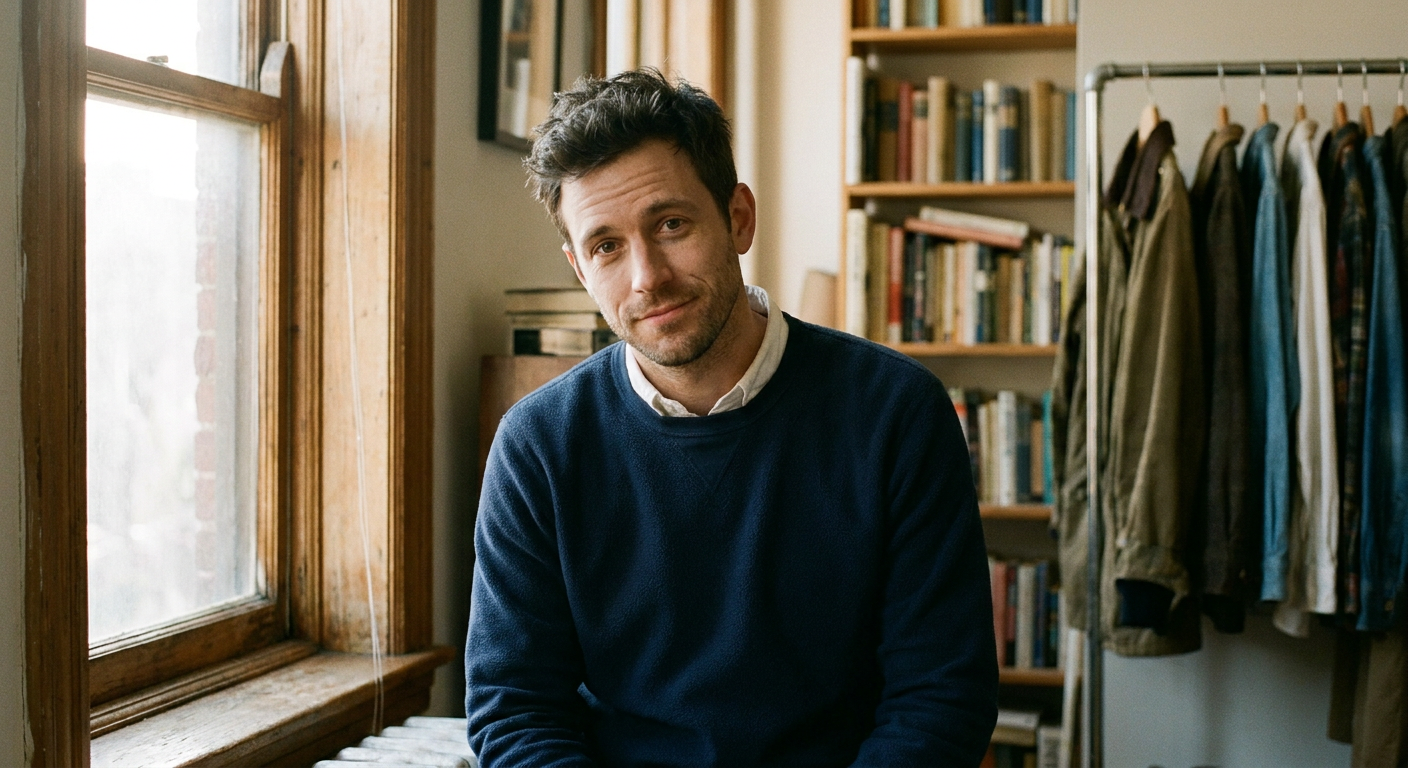
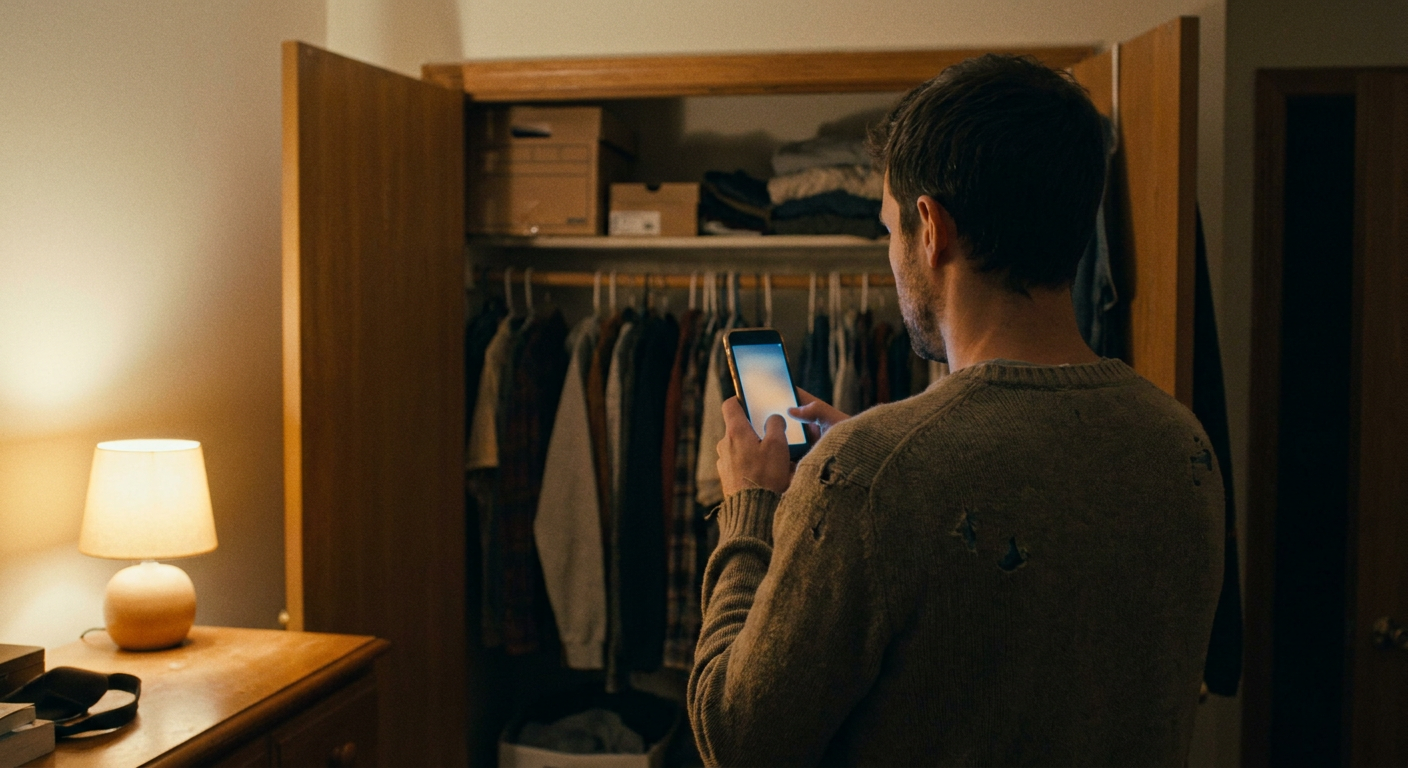
Sometime in the last two years, venture capital decided that the way you get dressed is a problem worth roughly $150 million. As someone who builds in this exact space and therefore reads every funding announcement the way other people read box scores — twice, with feelings — let me give you the honest tour. Names, numbers, receipts, and the one pattern nobody in any of these decks seems to have noticed.
The roster
Alta — the closet-first stylist. $11 million seed led by Menlo Ventures, announced June 2025, with participation from Aglaé Ventures — the Arnault family's fund, which means LVMH-adjacent money is now seeding AI stylists; file that away. Founder Jenny Wang, credibly technical, with angels including Tony Xu and Karlie Kloss. The product: photograph your closet (or forward your shopping receipts), get a digital wardrobe, an AI stylist, daily outfit generation, and a try-on avatar, powered by what Menlo describes as "over a dozen specialized models" trained with stylists in the loop.
The tell worth learning to read: Menlo's own announcement brags that users generate "over 270,000 outfits a day." Impressive — until you register that the app auto-generates outfits daily for every user. That's not a demand metric; that's the machine counting its own output, a toaster company reporting toast. No retention, revenue, or active-user figures have ever been published. This is not an Alta-specific sin — it's how the whole category reports — but Alta's version is the cleanest specimen.
Daydream — the $50 million search box. Fifty million dollars of seed capital — for a seed! — co-led by Forerunner and Index with GV and True participating, to build AI-native fashion search. And the résumé justified it: founder Julie Bornstein is the most credentialed operator in fashion tech, full stop — Stitch Fix COO, Sephora's digital chief, Nordstrom, and founder of The Yes, which Pinterest acquired. If chat-based fashion discovery were going to become a consumer habit, this was the team, the catalog (10,000+ brands claimed, men's nominally included), and the budget.
What actually happened: the beta promised for fall 2024 shipped in June 2025; the iPhone app arrived that November; and by this summer the industry chatter — a "Powered by Daydream" B2B program, a skeptical trade press — points toward the consumer app becoming a technology licensing business. Read that trajectory carefully, because it's the most informative data point in the entire category: the best team money could assemble struggled to make "describe what you want" a habit. I have a theory about why, below.
Phia — the price agent with a headline problem. Phoebe Gates and Sophia Kianni's shopping agent: $8 million Kleiner Perkins seed in September 2025, then a $35 million Series A at a $185 million valuation in January — ten months after launch. The product compares prices across secondhand platforms ("should I buy this?"), which is genuinely useful, and the traction claims came fast: a million users, 6,200 brand partners, "11x revenue growth" off a base no one would disclose.
Then July happened. Bloomberg's investigation — headline: "Gates Heir's Shopping App Took Credit for Sales It Didn't Drive" — alleged the browser extension was stuffing its affiliate cookie over other publishers' referrals via background tabs, claiming commissions on sales it didn't cause. The affiliate network impact.com suspended them within a day. Phia blames a bug. Maybe! But note the structural lesson, because it generalizes: when your revenue is commissions, your incentives eventually apply for write access to your codebase. The whole AI-shopping-agent category now wears this story.
Doji — the try-on toy. $14 million led by Thrive Capital (with Alexis Ohanian's 776), days after its App Store launch. Founders out of Apple's Vision Pro org and DeepMind — real ML pedigree. The product: six selfies plus two full-body photos, wait about thirty minutes, receive a photoreal avatar you can dress in The Row and Miu Miu and share with the group chat. It's genuinely fun. It is also an entertainment loop wearing a commerce costume, with purchase links that exit to retailer sites, and everything after its launch month — retention, revenue, whether the fun survives week two — is unpublished.
And looming over all of it: the ghost of Stitch Fix. The original algorithmic stylist. Peak: $2.1 billion in revenue, 4.2 million clients, an $11 billion market cap. Today: roughly $500 million of market cap — five percent of peak — and a client base down over forty percent, stabilized by a turnaround whose mechanics every founder in this category should be forced to recite: cost cuts, private-label margin, category expansion, and ending full-time employment for stylists. The market's verdict on styling-as-a-service version one is public information, filed quarterly with the SEC. Fortune's framing of the rescue: "He's fixing it like a traditional retail exec." Not like a styling company. That's the tombstone the new cohort is building on top of.
The AI-styling funding table, at a glance
Round data from investor announcements and named-source reporting, linked in text. Phia total includes seed + Series A.
The pattern, if you squint
Three observations from inside the same arena.
First, the traction theater is universal. Outfits-generated, items-scanned, cumulative "users," undefined "retention rates" quoted to friendly press — the whole category reports engagement the way casinos report foot traffic. Not one of these companies has published a retention curve or a revenue number with a denominator. I know why. It's not because the numbers are great.
Second, the two dominant mechanics both fight human nature, in opposite directions. The closet-logging apps ask you to photograph everything you own before the product becomes useful — homework as onboarding, a friction so well-documented it has a body count: Stitch Fix bought a digital-closet startup called Finery in 2019 and quietly buried it; the survivors in the wardrobe-app niche win precisely by using AI to reduce the logging. The chat-search apps err the other way: they ask you to describe what you want, which presumes the exact thing the mass-market man lacks — vocabulary and a formed intent. The man who can type "cream heavyweight knit polo, boxy fit, no logo" into a search box was never the man who needed help. Both mechanics select for the already-converted. The unconverted majority — the 0.8-percent-conversion market — bounces off both.
Third — and this is the one that genuinely amazes me — every product on this list is built for women. Alta's positioning is literally "Clueless for real life"; its cap table includes a supermodel and LVMH family money. Daydream's demos and press skew femme even though the catalog technically covers men. Phia's engine is womenswear resale — the platforms it price-checks are 70-plus-percent women's inventory. Doji launched on The Row and Miu Miu. You can audit $150 million of venture positioning and find barely a single male wardrobe in it. The customer with the collapsed retail infrastructure, the dead advice forums, the four-and-a-half-times-worse conversion rate — the one every one of these funds would call an "underserved market" in any other vertical — appears in nobody's deck. The gold rush found a valley and everyone's panning the same river bend.
What I'd actually bet on
Not a company — a mechanic. Strip away the funding theater and the category's real question is embarrassingly simple: who does the work? Closet apps make the user do the work. Search apps make the user do the work. Stitch Fix made human stylists do the work and went broke paying them.
The winner — whoever it turns out to be — will be the one that makes the software do the work and ships something no input can produce: an opinion. Here's your outfit. Here's why. Here's what it costs. Tell me where I'm wrong and I'll know you better tomorrow. That's not a search engine or a closet mirror; that's Sol from the second floor, rebuilt at marginal cost zero, working for the customer instead of the commission.
The $150 million is real, the models are real, the need is desperately real. What the category is still missing is cheaper than any of it and harder to raise: a point of view about how a specific person should actually get dressed.
The taste, so far, is still hiring.
Theo Marsh is the editor of the Fresh Journal. Cleveland-raised, Brooklyn-based; former vintage buyer and recovering sneaker reseller. He owns four navy sweaters and regrets none of them.